All guides · Practice
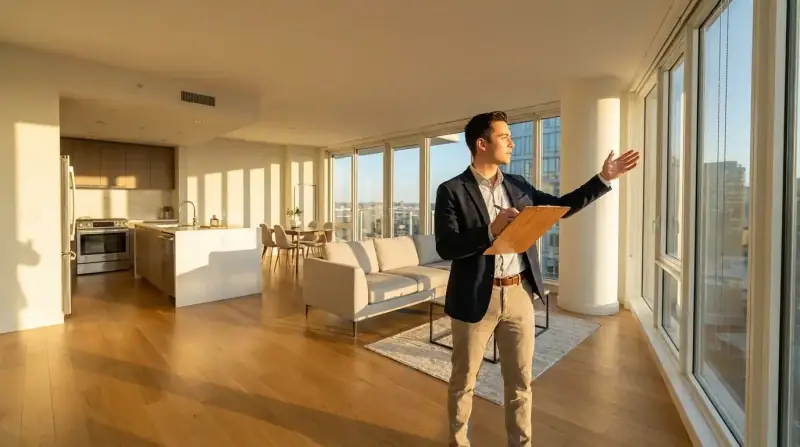
Viewing a property in Germany: the professional defect check
Updated: 2026-07-12 · Reading time: 11 min · ImmoLens editorial team
Editorial & transparency
This guide was written by the ImmoLens editorial team and last reviewed on 2026-07-12. The information is for orientation and does not replace legal, tax or financial advice.
Love at first sight? With property, that is dangerous advice. During a viewing you have to switch off your emotions and turn detective. Hidden defects can cost you tens of thousands of euros later on. Here is your professional checklist, compiled by experienced Bausachverständige (building surveyors).
1. The "red flags" checklist
You should check these five points systematically at every viewing:
2. The most expensive classes of defect and how to spot them
Almost all expensive surprises fall into six categories. If you know what to look for, you can roughly judge in 30 minutes at the viewing whether a five-figure sum is on the table:
| Class of defect | How to spot it | Cost range |
|---|---|---|
| Damp in the cellar | Salt efflorescence (white crystals) at the base of walls, flaking plaster, musty smell, water marks on boxes and shelves, a dehumidifier in the room | €15,000-50,000 |
| Roof | From inside: daylight between the tiles, dark patches on the timbers, sagging rafters. From outside: slipped tiles, moss, old gutters | €20,000-60,000 |
| Heating | Year of manufacture on the boiler's type plate, date in the chimney sweep's report. Note the boiler type, not just its age | Heat pump in an older building: €30,000-55,000 |
| Electrics | Screw-in fuses instead of circuit breakers, no RCD, two-core cables without an earth conductor, too few sockets per room | €12,000-20,000 |
| Windows | Single glazing (lighter test: a flame reflects twice in double glazing), condensation between the panes, sticking fittings, brittle seals | €800-1,500 per window |
| Cracks | Hairline cracks in the plaster are usually harmless. Take cracks seriously if they run step-like through the mortar joints, extend across several storeys, or come with doors that stick | Subsidence damage: an expert report, in extreme cases underpinning the foundations, easily five figures |
3. Tactics during the viewing
What matters is that the second person is not in love with the place. Anyone who has already fallen for the garden will no longer see the patch of mould in the cellar. Give your companion a clear brief beforehand: cellar, loft and fuse box. And agree that nothing positive is said inside the property. Every "wow" weakens your negotiating position, and the agent is listening.
Questions you should actively ask:
- "Which boiler type is installed, and from which year?" Ask to see the type plate and the last chimney sweep's report. That is the only way to settle the replacement obligation under § 72 GEG.
- "How high were the heating costs over the past 3 years?" Ask to see the statements, do not settle for a figure quoted out loud. A verbal answer is worthless. Compare them with the Energieausweis (energy performance certificate): if actual consumption is far higher, either the building is worse than certified or the system is badly adjusted.
- "What was renovated and when, and are there invoices for it?" An invoice proves three things at once: that the work was actually done, that a qualified firm did it, and when the tradesman's warranty runs out. "Done a few years ago" without a receipt is not information.
- "Are there any Baulasten (public-law building obligations) or rights of way?" They are not visible in the Grundbuch (land register), but in the municipality's Baulastenverzeichnis. They can reduce the value considerably.
- "Why are the owners selling?" Escaping known problems (noise, neighbours, a construction project next door) is more common than you might think. Also ask what is due to be built nearby, and check the Bebauungsplan (local development plan) at the building authority.
- "How long has the property been listed, and has the price already been cut?" Time on the market is your most important lever in negotiation. Portals show a listing date, and a property that has been running for months and has already come down once rarely gets more expensive.
- "Have there been any water damage incidents or burst pipes?" The seller has a duty of disclosure for known defects. Have the answer written into the purchase contract, which turns a claim into a warranted assurance.
4. Which documents you have to see
Documents are not paperwork for the notary, they are your only way of examining the property beyond its pretty surface. Ask for them before the draft purchase contract, not after:
- Section II (Abteilung II): residential rights, usufruct rights, rights of way, pipeline rights. A registered lifelong right of residence can slash the value and cannot simply be deleted.
- Section III (Abteilung III): existing Grundschulden (land charges). They must be deleted or redeemed by handover, which the notary arranges out of the purchase price.
- Section I (Abteilung I): do the seller and the registered owner match? With a community of heirs, all of them have to join the sale.
- Energieausweis (energy performance certificate): It must be shown to you at the viewing at the latest, without you having to ask. If that does not happen it is a regulatory offence, and it tells you something about the seller. More in the Energieausweis guide.
- Baugenehmigung (building permit) and the building file: Inspect them at the building authority, with the owner's power of attorney. This is where you see whether the converted loft or the conservatory was ever approved. An unapproved structure does not count towards the living area, and the authority can order it to be removed.
- Living area calculation, floor plans, building specification: the bank will need them anyway.
- Teilungserklärung (declaration of division, flats only): What is Sondereigentum (individual ownership), what is Gemeinschaftseigentum (common property), and which exclusive rights of use exist (parking space, garden, cellar room)? Windows and balconies are almost always common property, so you cannot change them on your own.
- Minutes of the owners' meetings for the last 3 years (flats only): the most honest source there is. Deferred renovations, disputes, litigation and agreed special levies are all in there.
- Business plan and the size of the Erhaltungsrücklage (maintenance reserve, flats only): A thin reserve next to a 50-year-old roof means one thing: the next special levy is coming, and it will be at your expense.
5. When a building surveyor pays for itself
Having an independent Bausachverständiger accompany you to a viewing costs roughly €400 to €800, depending on the region and the provider. They walk through the property with you, inspect it visually and tell you what they see. A detailed written expert report costs considerably more. For the buying decision the accompanied viewing is usually enough.
The maths is simple: a single missed defect from the table above costs a five-figure sum. The accompanied viewing costs a low three-figure one. It pays off especially for buildings built before 1980, for anything with visible damp, for cracks, and always when you are buying at the limit of your budget with no buffer for surprises.
6. Second viewing: a must
Always arrange a second viewing, ideally at a different time of day and in different weather. A property looks its best on a sunny Saturday morning, and that is exactly why viewing appointments are so often scheduled then:
- First viewing on a Saturday? Make the second one on a weekday during rush hour (traffic noise, parking situation).
- First one in sunshine? Make the second one in the rain. Only then do you see whether water pools around the house, whether the gutters overflow and whether the cellar gets damp.
- Go once in the evening: noise from neighbouring flats, street lighting, how full the parking spaces are after 7 pm.
- Pay attention to the neighbourhood: smells, pubs, commercial premises, railway lines, flight paths.
- Bring the surveyor along to the second viewing.
7. Further links
- Verbraucherzentrale (consumer advice centre) – construction and property finance
- VPB – Verband Privater Bauherren (find a surveyor)
- Bauherren-Schutzbund – find a surveyor
Analyse the listing before the viewing
ImmoLens automatically identifies risks and renovation needs from the Exposé, so you know what to look out for before the appointment.
Scan the listing for risksThe next step for your property
Check your listing for free with AI: renovation costs, funding programmes and risks in a few minutes. Start your analysis, or use the free tools: Closing cost calculator, Budget calculator, Viewing checklist.